Measures
Whether your brand is cited across ten engines. Google every week, AI answers every 15 days, with the total number of checks beside the percentage.
There are tools that only measure. Vynco measures your whole book of business across ten engines, points at what is blocking it, and turns every finding into a fix, a page and published content.
With your agency brand up front.
Free AI presence analysis, no card. Results in minutes.
real measurement · account under monitoring
of presence in the answers, in 1,050 checks
A real platform account, published with the client authorisation. The total number of checks appears next to the percentage because without it the percentage means nothing.
Every percentage ships with its number of checks beside it. That is the house rule.
Other brands we monitor appear without a score, because the number is only published with the brand written authorization. See the cases from our partner agencies clients →
Partner agency case studies
Six things, in this order. Anyone can run the first three for free right now, with no account. The next three are what the platform executes once the agency takes on the portfolio.
Whether your brand is cited across ten engines. Google every week, AI answers every 15 days, with the total number of checks beside the percentage.
Eight layers and 56 checks on the site, from CDN blocking to markup. It says why you do not show up, not just who shows up instead.
AI reader access, entity markup, canonical and structure. The audit comes out with the command next to the finding, not with a generic recommendation.
Pages per market, content and blog, reviewed before going live. Every generated page passes an automatic gate, or stays a draft.
The same promise in paid and organic, so the ad does not promise what the page does not deliver.
Dashboard and report with YOUR agency brand up front. The whole portfolio in one account, with per-person permissions and per-client usage.
→ swipe sideways
Three ways in, one for each moment:
You do not have to learn to operate this. Measure first, and the right agency for your segment receives your request with the diagnostic attached, so they arrive knowing what to talk about.
Three steps, and the first is free.
The partnership exists so the agency can sell AI presence under its own brand, without building a data team or buying a tool per client.
Content that stays trapped inside the tool is worth nothing. It is born publishable: in the blog Vynco builds, in the system the client already uses, or as a file for whoever publishes by hand.
The MCP server is remote and each key sees only that agency portfolio. See how MCP works · See the three publishing paths.
Six fronts, one measurement engine. The agency operates all six across the portfolio; the company buys the one that solves its problem now.
Five tools with no card and no account, for the agency to open a conversation and the company to size the problem.
See →Seven named audits, available together or separately, that say what to fix and in what order.
See →The modules the agency team operates every day, across the whole client portfolio.
See →The Vynco Method and the certificate that comes from a measured score, not from an exam.
See →The public data for each sector and each market, with open methodology.
See →The company finds the certified agency, and the agency receives the request with the diagnosis attached.
See →A free tool is the reduced audit. The audit is a snapshot of the monitoring module. The course teaches how to operate the module. The content is generated from what the engine measures. The network is routed by the score the engine calculates.
They came through the network: each one is served by a partner agency, which runs the platform on its own account.
In operation today
Companies served by Vynco partner agencies. A presence percentage for any of them is only published with the number of checks beside it and with written authorisation from the brand, the same rule as the rest of the site.
Six appear with their name, the question that generated the answer, and the position in which the brand was cited. The other four are described by the work, with no number, because publishing a result depends on the brand authorization.
?robotic surgery Uberlândia
The answer opens with “yes”. The question was whether the service exists in the city, and the one who stands for the existence of the whole service is the client.
?water truck in Santo André
An urgent service, with the phone number inside the answer. Whoever asks this calls the first name that shows up, ahead of four competitors.
?architecture firm in São Caetano
Source shown in the answer: the client own site, with a 4.9 rating on the map card.
?mattress store Grajaú
The answer brought the address and the opening hours along with it, which only happens when the location data is marked up in the code.
?fence rental Vila Mariana
Source shown: the client site. The answer gives the phone number and the service coverage across São Paulo.
?best pet shop with grooming near me
The same question repeated 956 times in a closed 30-day window. That is the difference between a screenshot and an audit: it is not a lucky query, it is a measured rate, and the rate is open on the cases page.
→ swipe to see all 6
Four more, described by the work
The problem. An operation with hundreds of stores and a single page for every market. The search for “cash-and-carry in [city]” had nowhere to land.
What was done. Programmatic structure per market, with address, opening hours and product mix marked up in the code, and the content of each region treated as its own page instead of a text variation.
The problem. A large catalogue, descriptions inherited from the manufacturer, and no answer of its own to the questions that come before the purchase.
What was done. Content per product line answering the decision question in the first sentence, with verifiable data instead of adjectives, and product markup linked to the organisation.
The problem. A brand strong in imagery and weak in machine-readable text: what carried its authority lived in photos and on social media.
What was done. Entity building: real authorship, coherence between the site and the rest of the internet, and collection pages that exist for the machine, not just for the eye.
The problem. Marketplace competitors holding the answer to category questions, with the brand site left out of them.
What was done. Mapping who was being cited instead, content for the unowned questions, and fixing the technical layer that was preventing agent reading.
→ swipe to see all 4
There are tools that measure AI visibility. What they do not do:
| Ranking in AI | SEO traditional |
Vynco | |
|---|---|---|---|
| Google position, by term | ✕ | ✓ | ✓ |
| Citation in the AIs, question by question | ✓ | – | ✓ |
| Google and AI in the same sweep | ✕ | ✕ | ✓ |
| AI reader access audit | ✕ | – | ✓ |
| It says why you do not appear, not just who does | ✕ | – | ✓ |
| It generates the fix: structure, page and content | ✕ | ✕ | ✓ |
| Scope market by market, city by city | ✕ | – | ✓ |
| Every percentage with its number of checks | ✕ | ✕ | ✓ |
| Agency network certified by a measured score | ✕ | ✕ | ✓ |
| Public sector index, with open methodology | ✕ | ✕ | ✓ |
The columns are tool categories, not companies: each row reflects what the category delivers today. A dash means it partly exists, not that it does not exist.
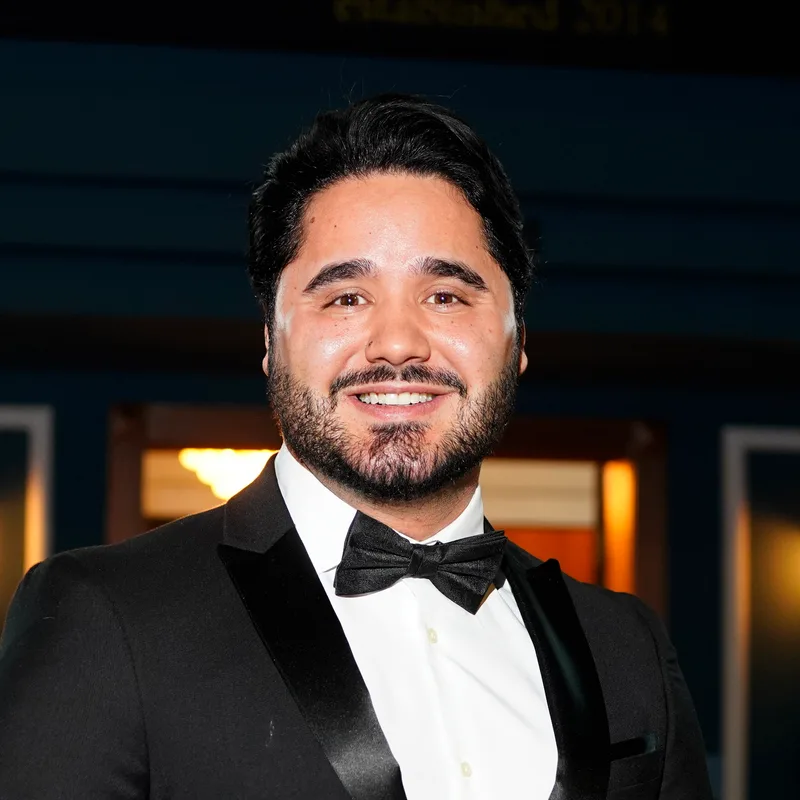
Alex Pinhol is the founder of Vynco, a member of G4 Club and student of cohort 3 of G4 Educação, and was listed in Forbes Under 30.
The platform was born with the operating discipline the school demands: numbers you can defend, a process that scales, and a client who pays the bill.
One article per business day, with the question that ran and the number of checks beside it. Those on the list see the new tool before it becomes a public offer.